
Smaller cemeteries often operate with limited staff, tight budgets, and growing expectations from families. As digital tools become more accessible, many cemetery teams are asking an important question:
Do we really need mapping features in our cemetery software?
If you’re exploring small cemetery management software, the answer depends on your goals, but for many organizations, mapping is no longer a “nice-to-have.” It’s a powerful tool that can improve accuracy, efficiency, and service for years to come.
In this post, we’ll break down what mapping features actually do, when they make sense for small cemeteries, and how to decide what’s right for you.
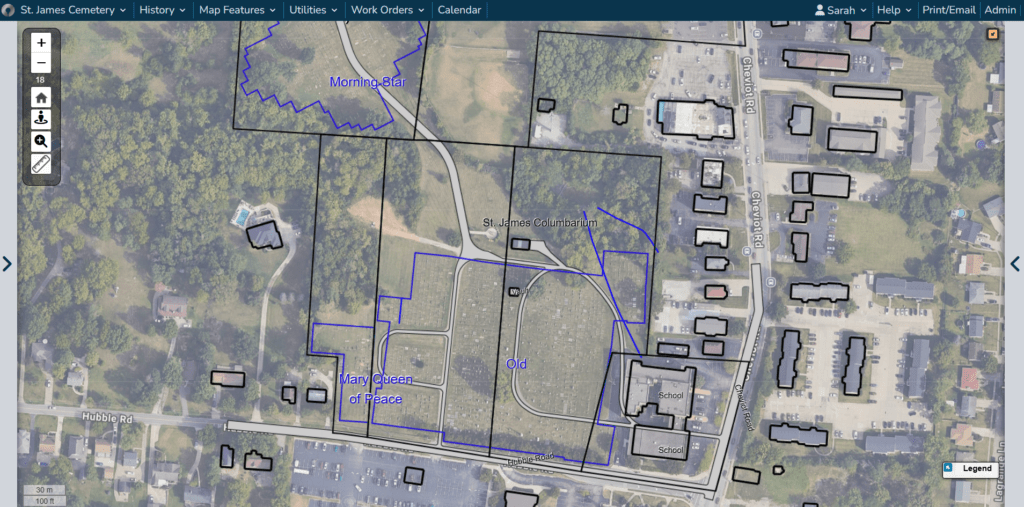
What Are Cemetery Mapping Features?
Cemetery mapping features allow you to digitally visualize your property, including:
- Section layouts
- Lot and grave locations
- Ownership and burial data tied to each space
- Navigation for staff and visitors
Instead of relying on paper maps, spreadsheets, or institutional knowledge, mapping brings all your records together in one interactive system. For small cemeteries, this might sound like a large-scale solution—but modern platforms like CIMS make mapping approachable and scalable.
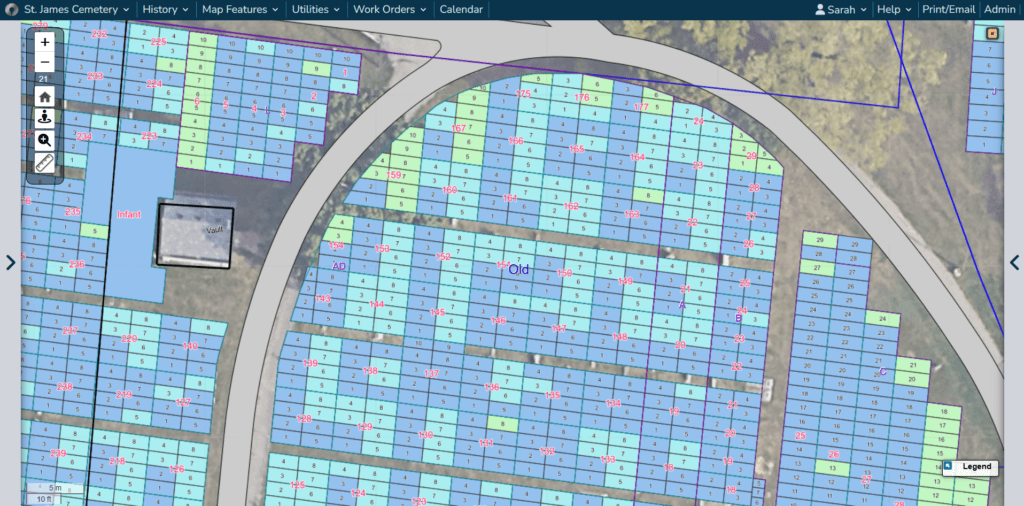
Why Mapping Matters for Small Cemeteries
Even if your cemetery has fewer records or simpler operations, mapping can deliver significant benefits.
1. Reduce Errors and Improve Accuracy
Manual recordkeeping leaves room for mistakes—especially when records are spread across paper files, spreadsheets, or outdated systems.
Mapping software connects your records directly to physical locations, helping you:
- Quickly verify ownership
- Avoid double-selling plots
- Ensure burial accuracy
For smaller teams with limited administrative support, this level of confidence is invaluable.
2. Save Time for Staff and Volunteers
Small cemeteries often rely on a handful of staff—or even volunteers—to manage operations.
Mapping tools make it easy to:
- Locate graves instantly
- Answer family inquiries faster
- Reduce time spent searching through records
Instead of spending hours tracking down information, your team can focus on serving families and maintaining the grounds.
3. Improve Service for Families
Today’s families expect quick, accurate answers—and increasingly, digital access to information.
With mapping features, you can:
- Provide clear directions to grave locations
- Support future public-facing tools (like online grave searches)
- Deliver a more professional, modern experience
Even small cemeteries can stand out by offering this level of accessibility.
4. Prepare for the Future
Even if your cemetery is small today, your records will continue to grow over time.
Implementing mapping early helps:
- Avoid future data migration headaches
- Create a scalable system from the start
- Preserve institutional knowledge
Think of mapping as a long-term investment in your cemetery’s organization and sustainability.
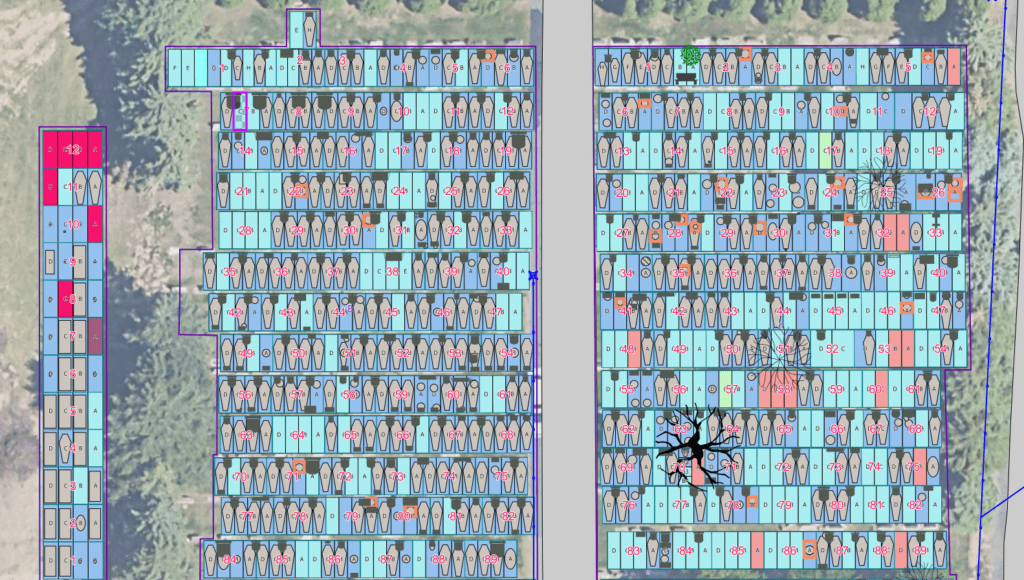
Do All Small Cemeteries Need Mapping?
Not necessarily. The right decision depends on your current needs and future plans.
You may not need mapping right away if:
- Your cemetery has very few available plots
- Records are simple and well-organized
- Staff can easily locate and verify information
However, mapping is highly beneficial if:
- You’ve experienced record discrepancies
- Families frequently request help finding graves
- Your team struggles with time-consuming lookup processes
- You want to modernize your operations
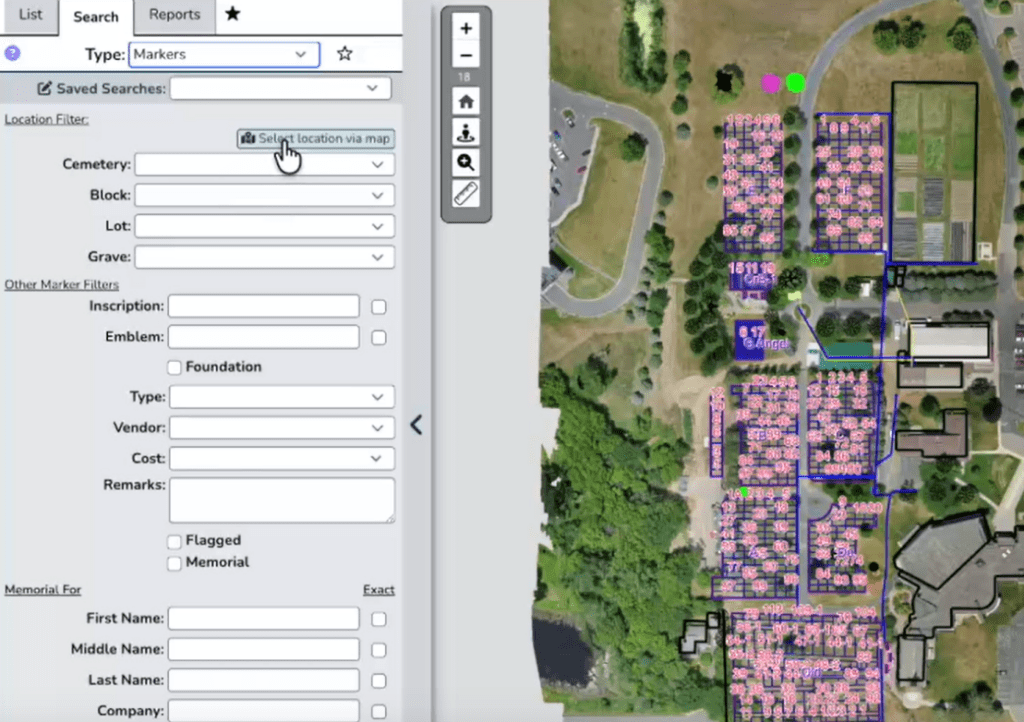
What to Look for in Small Cemetery Software
If you’re evaluating small cemetery software, focus on solutions that are flexible and right-sized for your organization.
Look for features like:
- Easy-to-use interface (no steep learning curve)
- Scalable mapping options (start simple, expand over time)
- Integrated recordkeeping and reporting
- Cloud-based access for small teams
- Strong support and onboarding
CIMS cemetery software is designed with these needs in mind, helping small cemeteries adopt technology at their own pace without overwhelming complexity.
Start Simple, Scale as You Grow
One common misconception is that implementing mapping requires a large upfront investment.
In reality, many cemeteries choose to:
- Start with core recordkeeping features
- Add mapping as needs evolve
- Gradually digitize records over time
This phased approach allows small cemeteries to modernize without disrupting daily operations.
For small cemeteries, mapping features aren’t always essential—but they can be transformative.
If you’re looking to:
- Reduce errors
- Save time
- Improve service for families
- Future-proof your records
then mapping is absolutely worth considering. The key is choosing software that fits your size, your team, and your goals.
See How CIMS Supports Small Cemeteries
CIMS cemetery management software is built to support organizations of all sizes, including small cemeteries looking for practical, scalable solutions. Whether you’re just starting to digitize records or exploring mapping for the first time, our team is here to help.
Request a free demo to see how CIMS can support your cemetery today.