
Cemetery maintenance is about much more than keeping grass cut and grounds looking presentable. It is an ongoing responsibility to preserve a cemetery’s history, protect its infrastructure, create a welcoming environment for visitors, and ensure the property can continue serving its community for generations.
For cemetery managers, municipalities, religious organizations, and other cemetery operators, that responsibility can involve everything from mowing and landscaping to monument care, road repairs, tree maintenance, and coordinating dozens of individual work requests.
Managing all of those responsibilities becomes much easier with a thoughtful cemetery maintenance plan.
In this guide, we’ll explore the essentials of cemetery maintenance, including gravestone cleaning, maintenance planning, work order management, and ways to involve your community in caring for your cemetery.
What Does Cemetery Maintenance Include?
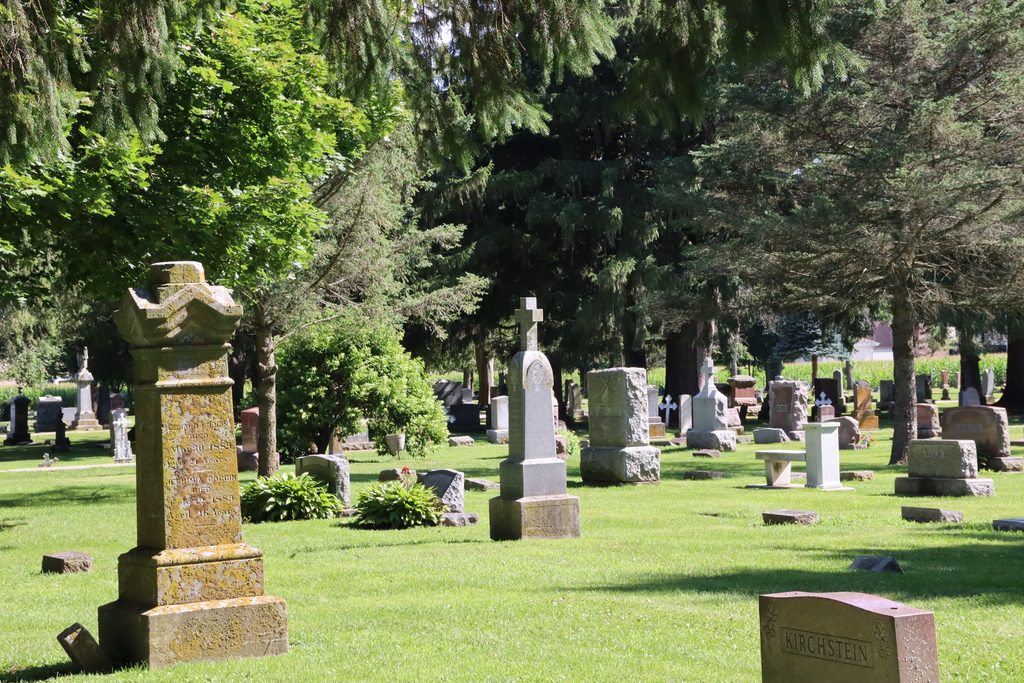
Every cemetery is different. A small historic cemetery may have very different maintenance requirements than a large, active municipal cemetery. Still, most cemetery maintenance programs need to account for several areas of ongoing care:
- Mowing and turf management
- Tree and shrub maintenance
- Leaf and debris removal
- Road and pathway maintenance
- Drainage and erosion management
- Fence and gate repairs
- Building and facility maintenance
- Gravestone and monument care
- Trash collection
- Snow and ice removal
- Irrigation maintenance
- Pest and invasive species management
- Landscaping around entrances and common areas
- Maintenance related to burials and gravesites
The challenge is not simply identifying what needs to be done. Cemetery operators also need a reliable way to prioritize, assign, document, and track that work.
Essential Maintenance for Cemeteries
A good cemetery maintenance program starts with consistency. Rather than addressing problems only when staff or visitors notice them, cemetery operators can develop recurring maintenance schedules based on the needs of the property.
Grounds and landscaping
Mowing, trimming, leaf removal, and landscaping are among the most visible cemetery maintenance responsibilities. Regular groundskeeping keeps the cemetery accessible and creates a respectful environment for families and visitors.
Maintenance schedules should account for seasonal changes as well as areas that require special attention. Historic sections, steep terrain, natural areas, and locations containing tightly spaced monuments may require different equipment or maintenance practices.
Trees and vegetation
Mature trees can be an important part of a cemetery’s character, but they also require ongoing care. Dead limbs, diseased trees, invasive plants, and overgrown vegetation can damage monuments or create hazards for employees and visitors.
Regular tree and vegetation management can help cemetery staff identify these issues before they result in more significant damage.
Roads, paths, and drainage
Cemetery roads and paths experience deterioration just like other infrastructure. Cracks, potholes, uneven walking surfaces, pooling water, and erosion should be identified and addressed as part of routine maintenance.
Drainage deserves particular attention. Poor drainage and erosion can affect roads, landscaping, gravesites, and monuments, making preventative inspection especially valuable after periods of heavy rain or snowmelt.
Fences, signs, and facilities
Entrances, fences, signage, benches, maintenance buildings, offices, columbaria, and other cemetery infrastructure should also be included in routine inspections.
Keeping an inventory of these assets and their condition can help cemetery staff shift from reactive repairs toward more proactive maintenance planning.
Gravesites and monuments
Staff should regularly monitor cemetery sections for issues such as damaged or unstable markers, settling soil, erosion, and other conditions that may need attention.
Historic monuments require particular care. Before attempting a repair, cleaning, or restoration, cemetery operators should determine whether specialized expertise is needed. A well-intentioned repair can cause permanent damage when inappropriate materials or methods are used.

Gravestone Cleaning: What Cemetery Staff Should Know
Gravestone cleaning is one of the most visible forms of cemetery upkeep, but it is also an area where caution matters.
Older monuments can be made from marble, limestone, sandstone, granite, slate, and other materials, each of which responds differently to cleaning and environmental conditions. Historic stones may already be weakened by age, cracking, biological growth, or previous repairs.
Before cleaning a gravestone, first evaluate its condition. A marker that is cracked, flaking, unstable, or otherwise deteriorated may require professional assessment rather than routine cleaning.
For stones that can safely be cleaned, the gentlest effective approach is generally the best starting point. Avoid aggressive scraping, high-pressure washing, household bleach, harsh acids, or abrasive tools that could permanently alter the stone.
Cemeteries should consider creating documented procedures for monument cleaning and make sure employees and volunteers understand them before beginning work. For historically significant or deteriorated markers, consultation with a qualified monument conservator can help protect the stone’s long-term integrity.
Most importantly, maintenance should focus on preservation rather than making an old gravestone look new.
Using Work Orders to Track Cemetery Maintenance
One of the biggest challenges in cemetery maintenance is keeping track of everything that needs attention.
A visitor might report a damaged monument. Staff may notice a broken irrigation head while mowing. A tree may need inspection following a storm. Meanwhile, routine maintenance still needs to happen on schedule.
If these requests are managed through handwritten notes, emails, spreadsheets, or word of mouth, tasks can easily fall through the cracks.
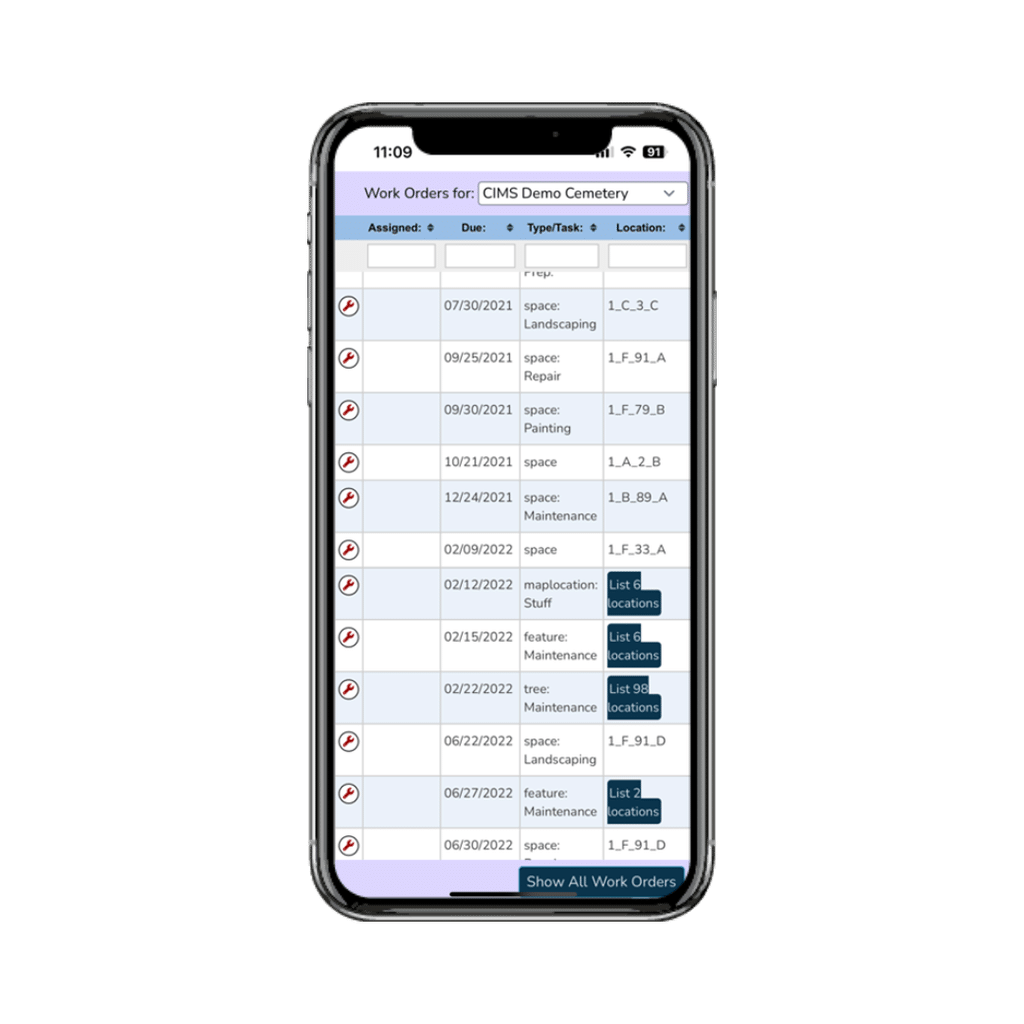
A cemetery work order system creates a more structured process.
A maintenance work order can include information such as:
- The maintenance issue or requested service
- Its location within the cemetery
- The person who reported it
- The employee responsible
- Priority or status
- Relevant notes
- Dates associated with the request
- Documentation of completed work
With a centralized system, cemetery staff can see what work remains outstanding, what has been completed, and where recurring maintenance issues are developing.
Connecting work orders with cemetery records and maps
Work orders become even more useful when they connect with the cemetery’s other digital records.
Instead of receiving a request that says, for example, “repair the marker near the Smith grave,” staff can associate work with a specific grave, lot, plot, structure, or mapped location.
This is where cemetery mapping software can make a significant difference.
With CIMS, cemetery operators can bring records, mapping, and day-to-day cemetery management into one system. That helps staff spend less time tracking down information and gives them a more complete view of what’s happening throughout the cemetery.
Over time, that maintenance history can also inform planning. Repeated drainage problems in one section, for example, may indicate that the cemetery needs a larger infrastructure improvement rather than another one-time repair.

How to Get Your Community Involved With Cemetery Upkeep
Cemeteries are community spaces. Many hold generations of local history and tell stories that extend far beyond the individuals buried there.
That makes cemetery upkeep a natural opportunity for community involvement.
Organize cemetery cleanup days
A community cleanup day can help tackle appropriate labor-intensive tasks while encouraging residents to learn more about the cemetery.
Depending on the property and the experience of volunteers, projects might include:
- Picking up litter
- Removing leaves or fallen branches
- Clearing designated areas
- Planting approved landscaping
- Cleaning signs, benches, or other suitable features
- Documenting cemetery conditions
Provide clear instructions about what volunteers should and should not touch, particularly when historic monuments are involved.
Partner with local organizations
Historical societies, veterans groups, schools, scouting organizations, service clubs, genealogical societies, and preservation organizations may all have a natural interest in cemetery projects.
These partnerships can support maintenance while also creating opportunities to document cemetery history, improve records, or educate the public.
Make it easy to report maintenance issues
Community participation doesn’t have to mean physically performing maintenance.
Frequent visitors can help identify fallen branches, damaged signage, drainage problems, or other issues staff may not have encountered yet. Establishing a clear process for submitting maintenance requests makes that information easier to act upon.
The important part is ensuring those requests enter a centralized system where they can be reviewed, prioritized, assigned, and ultimately marked complete.
Use volunteer days to create community advocates
Community projects can also provide an opportunity to explain why certain cemetery maintenance practices are important.
Educational events can teach volunteers about monument preservation, cemetery history, mapping, genealogy, or the reasoning behind particular maintenance policies. Rather than simply asking the community to help clean up, cemeteries can build lasting advocates for preservation.
Creating a Cemetery Maintenance Plan
Individual maintenance projects matter, but the most effective cemetery upkeep is proactive.
Consider building a cemetery maintenance plan around four basic steps:
1. Inventory your cemetery’s assets
Document the cemetery’s physical assets, including roads, paths, buildings, trees, fences, signs, monuments, landscaping, and other infrastructure.
2. Schedule routine inspections
Establish routine inspections to identify emerging problems before they become more expensive or difficult to resolve.
3. Prioritize safety
Not every maintenance need carries the same urgency. Safety concerns, active deterioration, accessibility issues, and problems that could cause additional damage should generally receive greater attention than cosmetic improvements.
4. Document requests and repairs
Record maintenance requests, completed work, recurring issues, and relevant dates. Good documentation gives future staff a clearer picture of what has happened across the property and can help cemetery leadership make more informed decisions about budgets and long-term improvements.
Better Cemetery Maintenance Starts With Better Information
At its core, cemetery maintenance is an information-management challenge as much as a groundskeeping one.
Staff need to know what needs attention, where it is located, who is responsible, what work has already been performed, and what should happen next.
As cemeteries digitize their operations, connecting maintenance activities with cemetery maps, burial records, and other operational information can make that process significantly easier.
CIMS Cemetery Software gives cemetery teams tools to manage information in one place, helping them stay organized and spend more time serving families and caring for their grounds.
Ready to see how better cemetery management can support your day-to-day operations? Request a CIMS demo to learn more.