
How a 130-year-old veterans cemetery combined preservation, community involvement, and cemetery management technology to make its history more accessible and support its future.
The Granite Falls American Legion Cemetery has served its Washington community since 1892. But after more than 130 years, managing that history came with challenges.
Records existed across Excel spreadsheets and handwritten notes. Headstones needed cleaning and realignment. The cemetery office required improvements. And although the cemetery remained active, many people in the community believed it was no longer in use.
Beginning in late 2024, Granite Falls American Legion Post 125 set out to change that.
What started as a cemetery cleanup grew into a nearly two-year preservation effort involving Post members, scouts, a church group, local businesses, and other community volunteers. The work ultimately earned Post 125 the 2026 State Historic Preservation Officer’s Cemetery Preservation Award.
Alongside the physical restoration, the cemetery took an equally important step toward its future: implementing CIMS Plus to transform scattered historical records into an accessible digital cemetery management system.
Bringing More Than a Century of Cemetery Records Together
One of Granite Falls’ biggest priorities was gaining better control over the physical cemetery and the records connected to it.
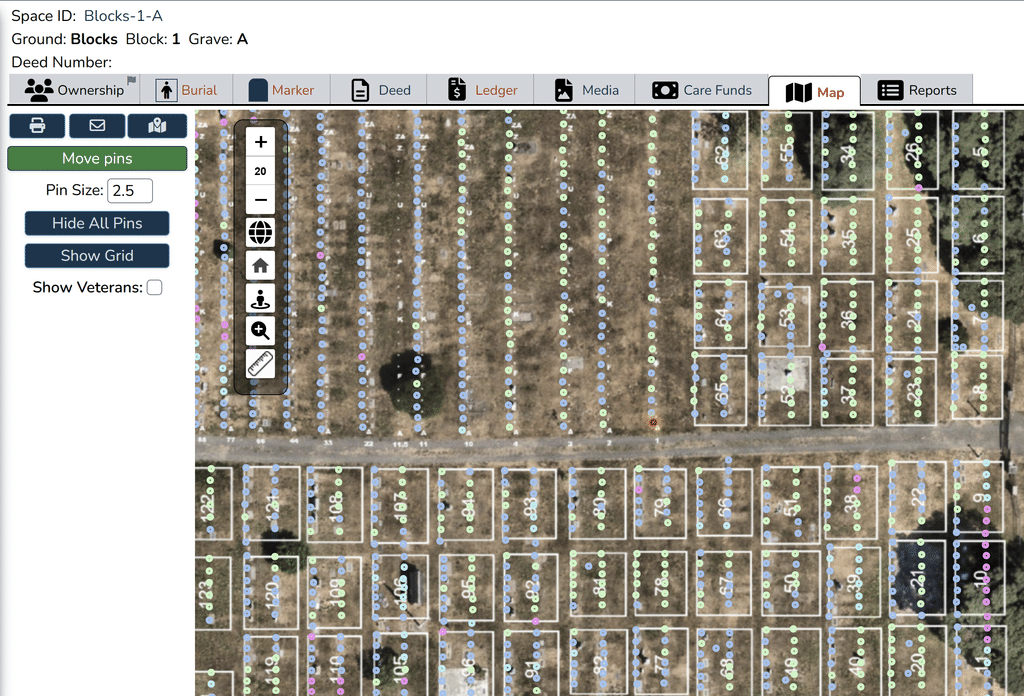
The cemetery already had geo-referenced imagery, and CIMS allowed the team to put those existing resources to work rather than incur the additional expense of new drone photography.
From there, volunteers began transferring information from spreadsheets and handwritten records into CIMS. The team verified records, corrected misspellings, and compared names and dates against physical headstones to create a more accurate connection between cemetery records and the grounds themselves.
As the cemetery explained in its Capterra review of CIMS:
“Our biggest reason for choosing CIMS was to make the physical cemetery easier to manage and record. The system made use of our existing geo-referenced images, allowing us to avoid the expense of drone photography.”
CIMS Plus also gave the team the flexibility to complete much of the data entry themselves, allowing the cemetery to build a system around its own records, needs, and resources.
Turning Cemetery Records into a Resource for Visitors
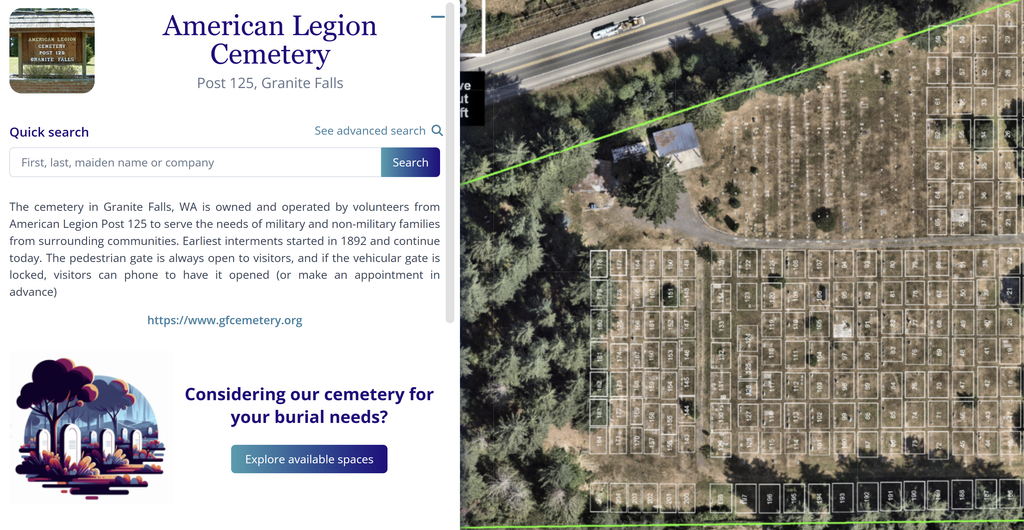
Digitizing the information created a new way for the public to engage with the cemetery. Through the cemetery’s online burial search, visitors can look up an individual and use their phone to navigate directly to the grave. They can also explore the cemetery through its history.
For example, Granite Falls is home to 13 Civil War graves. A visitor interested in that history can search for Civil War veterans and use the cemetery’s digital information to locate their gravesites.
The cemetery has even added portraits of Civil War veterans to its online records, bringing another layer of history and humanity to the burial search experience.
As the cemetery noted in its review:
“The CIMS user interface enabled us to perform our own data entry from existing records to provide outstanding ‘cemetery search’ capability!”
That visitor experience has helped turn information that once lived primarily in spreadsheets and handwritten records into something the entire community can explore.
Using Technology to Support a Larger Revitalization
CIMS Plus was one part of a much larger transformation at Granite Falls.
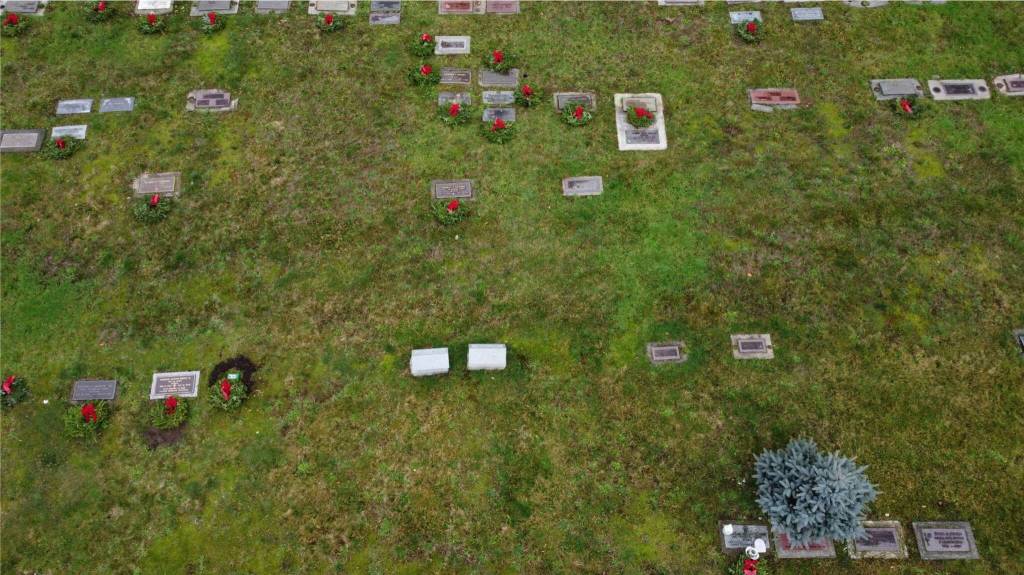
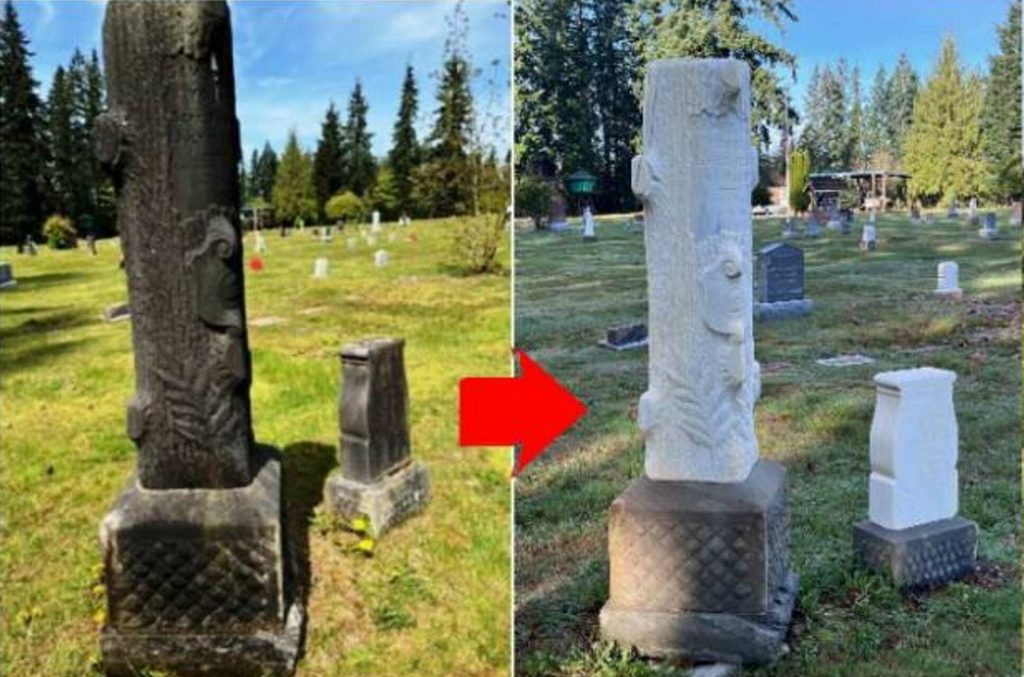
Volunteers cleaned headstones, uncovered markers that had disappeared beneath years of grass and soil, and worked to straighten stones that had shifted over time. Improvements to the cemetery office included new paint, a roof, a deck, and an accessibility ramp. Community businesses also stepped forward to contribute materials, landscaping, time, and labor.
As those improvements became visible, people began returning to the cemetery.
According to members of Post 125, community participation grew significantly during the project. Post meetings that once might have attracted only two or three participants began drawing 20 to 25.
The renewed visibility also helped remind residents of something important: Granite Falls American Legion Cemetery was still active. In 2025, the cemetery recorded 17 burials.
The transformation demonstrates how cemetery preservation can extend beyond maintaining monuments and grounds. By making information easier to find and the cemetery easier to navigate, technology can complement physical preservation efforts and give families, visitors, historians, and the wider community more reasons to engage with a cemetery.
More Than Cemetery Mapping
Granite Falls initially selected CIMS primarily to better manage the physical cemetery. As the team began using the platform, however, they discovered opportunities beyond mapping and burial records.
The cemetery can connect information about physical spaces, customers and visitors, and financial transactions within the same system. Its team also found that CIMS could help simplify financial recordkeeping.
“We enjoy the ability to establish strong links between the physical cemetery, financial transactions, and customers/visitors. Data entry is straightforward, user interfaces are easily customizable, visitor experience is amazing.”
That flexibility has allowed Granite Falls to tailor CIMS Plus to the cemetery it manages today while retaining options that may become valuable as its needs evolve.
Preserving History While Supporting the Cemetery’s Future
Winning the 2026 State Historic Preservation Officer’s Cemetery Preservation Award recognized an extraordinary community effort. But the story of Granite Falls American Legion Cemetery is also about what happens after a restoration project is complete.
By pairing hands-on preservation with better cemetery management technology, Post 125 has created a stronger foundation for ongoing maintenance, accurate records, active burials, historical research, and community involvement.
The cemetery’s transformation shows that modernization does not have to mean leaving history behind. Done thoughtfully, it can make that history easier to preserve, explore, and share.
For Granite Falls, CIMS Plus helped turn more than a century of cemetery information into a resource that serves both cemetery managers and the community around them.
“While our original intent was to merely gain control over the physical aspects of the cemetery, we are pleased to find that we can also simplify our financial record-keeping, as well.”
See What CIMS Plus Can Do for Your Cemetery
Whether you’re working to organize decades of cemetery records, improve burial search, connect records with cemetery maps, or create a better experience for families and visitors, CIMS can help you bring that information together. Schedule your free demo today!