
When you measure your cemetery’s history in centuries instead of decades, your records get complicated. Maps get lost or damaged over time. Early burials were never recorded. Deeds and interment records disappear.
Even cemeteries founded in the twentieth century struggle to fill gaps in their records and fully understand the histories of their cemeteries. Enter ground penetrating radar (GPR). GPR helps cemetery staffs all over the world unpack their cemetery history, confirm burial locations, and find unmarked graves. For these cemeterians, ground penetrating radar offers a glimpse into the past, uncovering the well-kept secrets of their cemetery grounds.
So what is ground penetrating radar? And how do cemeteries use GPR to find lost graves and improve their maps?
What is ground penetrating radar?
Ground penetrating radar (GPR) is a radar system that sends a series of electromagnetic pulses underground to detect subsurface materials and scan areas for anomalies. Cemeteries use GPR to find unmarked burial locations, hidden objects, and water or utility lines without disturbing soil. It can also confirm the location of known burials and determine casket positioning to improve the overall accuracy of cemetery maps. Because GPR investigates areas of interest without digging, excavating, or disrupting the ground, it is a safe and effective surveying method for sensitive sites.
Ground penetrating radar has a variety of applications for cemeteries and other sites. It can also be used to detect geological features and changes in ground strata, underground pipes and unmarked utilities, air pockets and voids, groundwater tables, and materials like concrete, metal, plastic, and PVC. Since GPR equipment is expensive—often costing more than $30,000—and it takes many hours of training to use GPR properly, cemeteries often hire ground penetrating radar experts for cemetery mapping software projects.
How does GPR work?
Ground penetrating radar equipment sends electromagnetic pulses into the ground and records any reflected or refracted signals produced by underground objects. When the signals created by the ground penetrating radar system meet materials below the surface, the pulses are disrupted. GPR uses software that records and measures these scattered signals (which are captured by the device’s antenna). It then translates any variations into images of subsurface objects. These images are used to map buried materials, such as utilities, headstones, or unconfirmed burials.
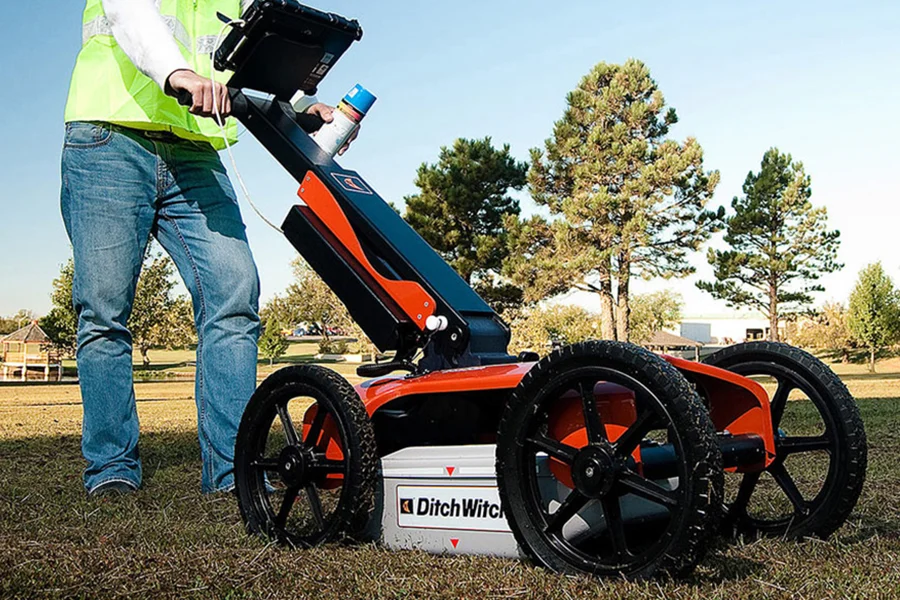
Most ground penetrating radar systems resemble the humble push mower. Like push mowers, these systems often require manual force to propel them forward. That being said, operating a GPR takes more than human force and a can-do attitude. If you’re interested in using a ground penetrating radar at your cemetery, contact a GPR expert for help.
Can ground penetrating radar actually detect unmarked graves?
Yes. Ground penetrating radar can detect burial remains and caskets. It is especially useful for finding interments from the past 50 years. Older burials are more difficult to locate but can be detected by a trained GPR expert using a modern radar system. If a casket does not exist or has deteriorated, a GPR expert will analyze scans for disturbed soil and other indications of a past burial. Other factors, including soil quality and subsurface conditions affect the efficacy of ground penetrating radar for cemeteries.
How do cemeteries use ground penetrating radar?
Cemeteries hire ground penetrating radar specialists to complete their cemetery records, prepare for digitizing cemetery maps, and learn more about their grounds ahead of an expansion. Here are the most common applications of GPR for cemeteries.
Confirming burial locations
Accuracy is paramount for cemeteries. Ground penetrating radar confirms exact locations of burials and underground disturbances. By precisely pinpointing burial locations, cemetery managers can maintain comprehensive records. GPR also offers a significant advantage over traditional location techniques like probing by detecting burials even without a concrete vault. This is possible through its ability to detect disparities in soil composition and density.
Finding unmarked graves and artifacts
It’s common for cemeteries that have been around for hundreds of years to have incomplete records. After all, many cemeteries with long histories have had generations of record keepers—and some of those record keepers may have been less detail-oriented than others. Modern cemeterians must contend with missing or destroyed burial records. Add unmarked graves and buried headstones to the mix and mapping an older cemetery can prove to be a major undertaking.
GPR helps cemeterians address these problems and find lost graves without disturbing their cemetery’s landscaping. A common technology for grave detection, GPR accurately detects most interments. Although graves older than 50 years or without a concrete vault can be difficult to locate, trained GPR operators are able to spot anomalies in the soil and surroundings to detect signs of a burial.
Scanning new cemetery sections
When expanding or renovating cemetery grounds, GPR allows cemeteries to scan new areas to detect hidden objects or potential obstacles. This approach ensures that construction projects can proceed smoothly without complications. It also helps cemeterians begin to map available inventory in new sections.
Improving digital cemetery maps
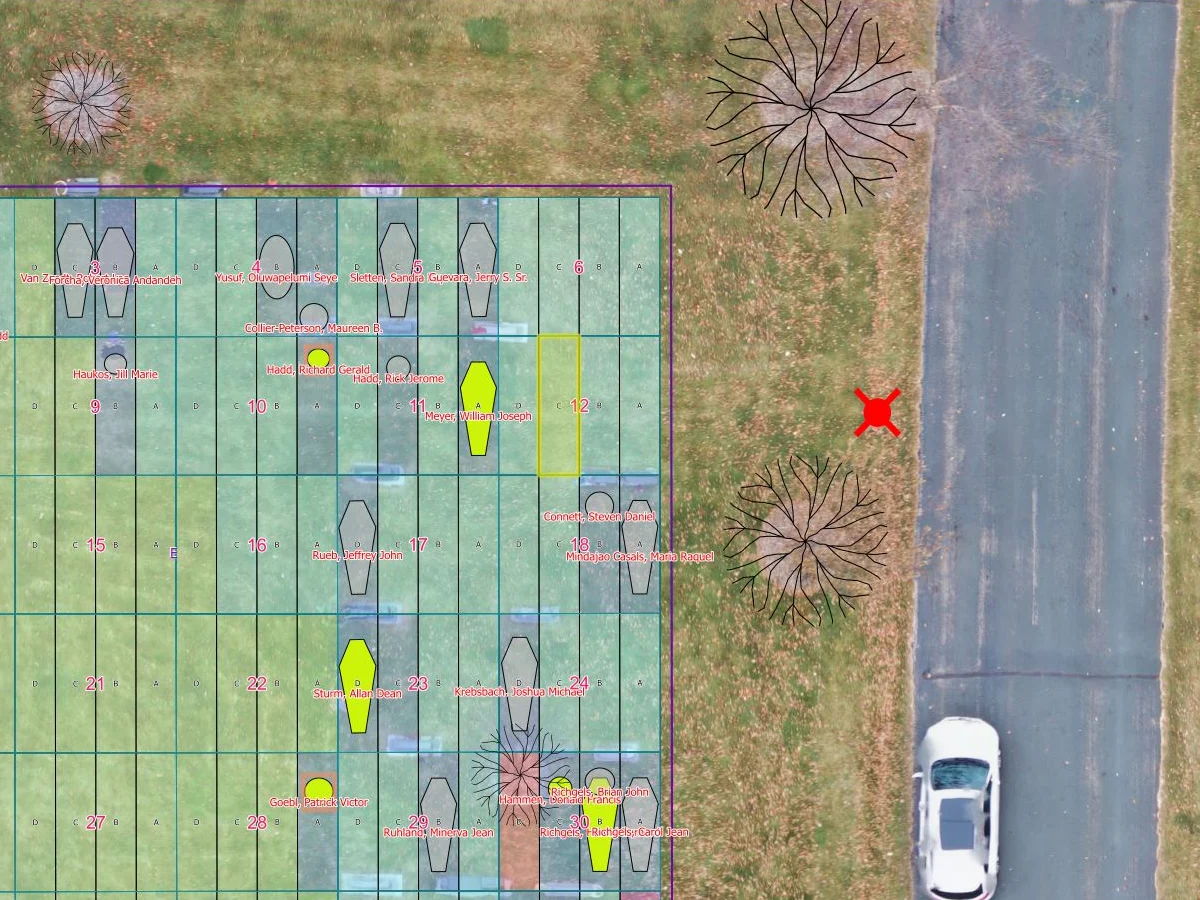
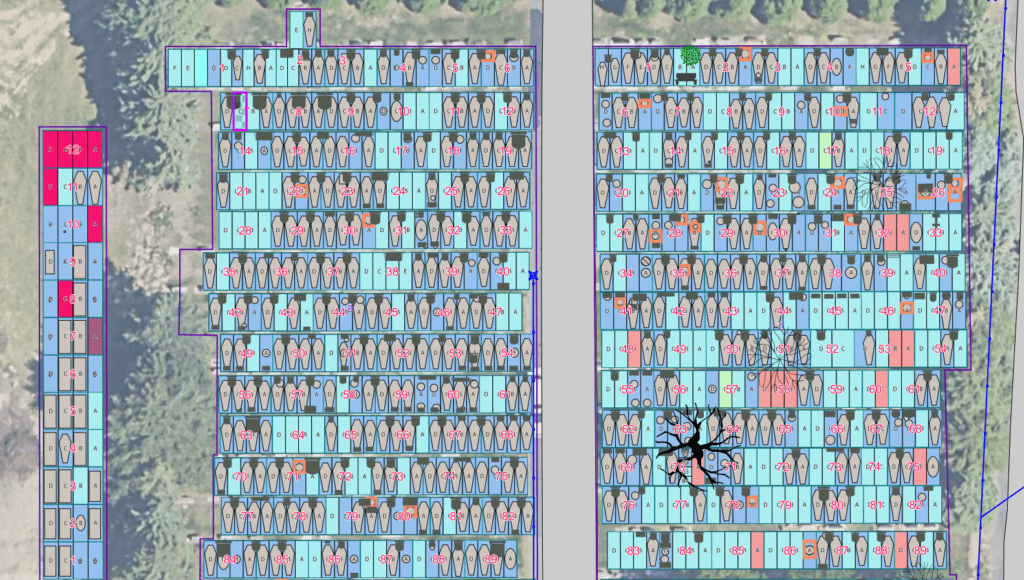
Even historic cemeteries take advantage of modern technology. If you use cemetery mapping software, you can integrate GPR findings into your digital maps. This data gives cemeterians a real-time picture of which plots are occupied or obstructed, which ones have been sold, and which ones are available. As importantly, GPR can uncover new plots available for sale.
How to find burial headstones and unmarked graves
The most effective way to locate unmarked graves and lost headstones on cemetery grounds is to use ground penetrating radar. Ground penetrating radar allows cemeteries to investigate large areas of land for underground anomalies, including buried markers, caskets, utilities, and other subsurface materials. Most GPR systems resemble push mowers and detect geological features and obstacles by sending a series of pulses into the ground.
The best part? GPR is non-intrusive, meaning that cemeteries can receive a detailed report on the subsurface of a given area without digging, excavating, or otherwise disrupting their grounds.
While ground penetrating radar has multiple applications, the technology is commonly used to survey cemetery grounds and can accurately detect most interments. Whether you’re surveying your cemetery grounds for headstones lost to time or trying to uncover previously unknown burials, GPR is an invaluable resource for cemetery managers. GPR can also identify changes in ground strata, underground pipes and unmarked utilities, air pockets and voids, groundwater tables, and materials like concrete, metal, plastic, and PVC.
Ground penetrating radar is commonly used when cemeterians suspect burials are missing from their existing maps. However, that is not the only use case for GPR on cemetery grounds. Space is a big concern for today’s cemeteries, and ground penetrating radar systems are also useful when considering expansion.
Get pricing for ground penetrating radar services
Ready to confirm burial locations and identify anomalies at your cemetery? CIMS Cemetery Software provides GPR services for municipal, private, and religious cemeteries in the United States and Canada. Reach out today to get accurate ground penetrating radar pricing for your cemetery.