
When cemetery mistakes make headlines, the impact reaches far beyond the cemetery gates. Families lose confidence. Staff spend countless hours investigating records. Trustees and municipal leaders face difficult questions from their communities.
While these situations are relatively rare, they highlight an important reality: cemetery records are too important to rely on paper maps, handwritten notes, and aging filing systems. Today’s cemeteries are expected to maintain accurate records, preserve historical information, serve families efficiently, and protect data for future generations. That’s why more cemeteries than ever are investing in cloud-based cemetery management software.
In fact, CIMS now supports more than 1,000 cemeteries through its cloud platform, helping organizations across the United States modernize records, improve operations, and reduce risk. If you’re trying to gain support from trustees, municipal officials, finance committees, or other decision-makers, here are the key points that help demonstrate why cemetery software is no longer a luxury. It’s an essential tool for modern cemetery management.
What Is Cemetery Management Software?
Cemetery management software is designed to help cemeteries organize records, manage inventory, track sales, document burials, and maintain accurate maps of cemetery property. Modern platforms combine cemetery records with digital mapping, cloud-based access, reporting tools, and public-facing services that improve both internal operations and customer service.
Unlike paper-based systems, cloud-based cemetery software allows authorized users to securely access information from any location while maintaining a centralized source of truth for cemetery records. CIMS was specifically redesigned as a cloud platform to give cemetery staff access from computers, tablets, and mobile devices without maintaining local servers.
1. Cemetery Software Reduces the Risk of Costly Errors
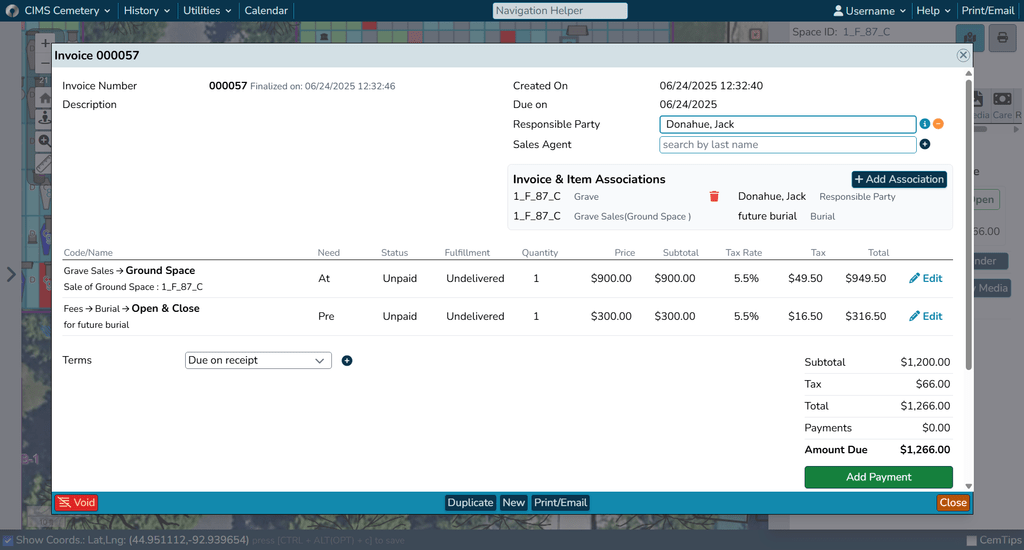
The strongest argument for cemetery software is simple: accuracy matters. Every burial, deed, transfer, reservation, and maintenance record must be documented correctly. When information is stored across filing cabinets, spreadsheets, paper maps, notebooks, and individual staff members’ memories, mistakes become more likely.
Modern cemetery software creates a centralized record system that helps staff:
- Verify ownership and burial rights
- Track available and sold inventory
- Access records instantly
- Reduce duplicate or conflicting information
- Maintain a clear history of changes
For trustees and municipal leaders, fewer mistakes mean lower liability and greater confidence in cemetery operations.
2. Cemetery Software Protects Records for Future Generations
One of the most common concerns cemetery leaders have is:
“What happens if our paper maps are damaged, lost, or destroyed?”
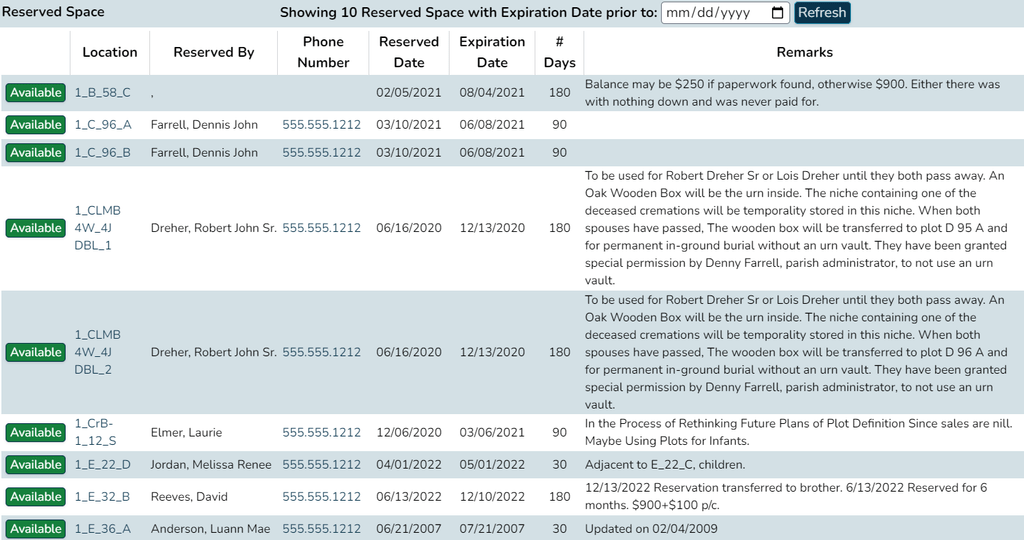
Water damage, fire, natural disasters, deteriorating paper records, and staff turnover all threaten the long-term preservation of cemetery data. Cloud-based cemetery software helps safeguard historical records while making them easier to access and maintain. Digital maps, burial information, deeds, photographs, and supporting documents can be securely stored and managed in one location.
For decision-makers, software is not just an operational investment. It’s an investment in the preservation of the cemetery’s history and legacy.
3. Cemetery Software Helps Staff Accomplish More Without Adding Personnel
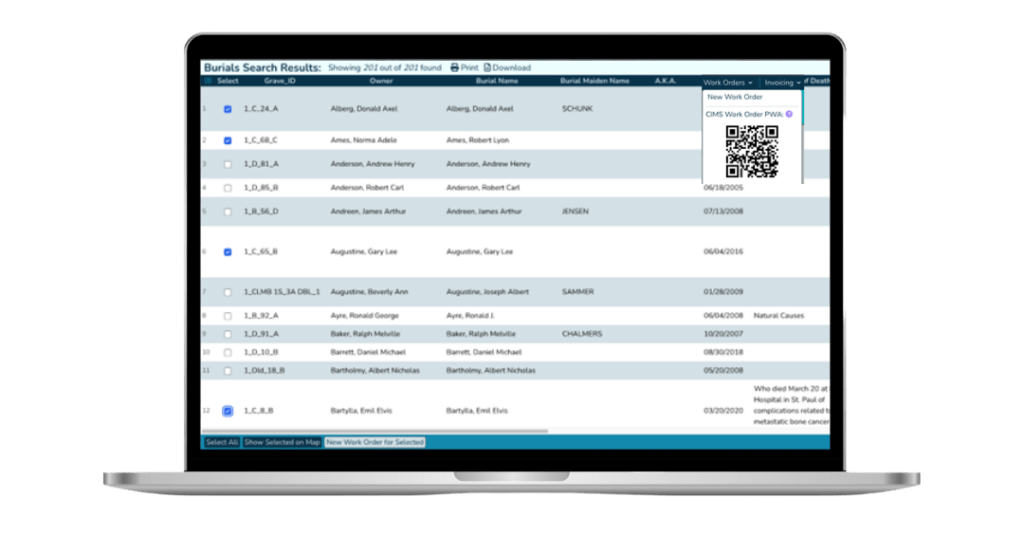
Many cemeteries are facing the same challenge: growing responsibilities with limited staffing. Cemetery software allows staff to spend less time searching for information and more time serving families and maintaining the cemetery.
Modern systems can streamline:
- Record searches
- Burial lookups
- Deed creation
- Work orders
- Reporting
- Inventory management
- Customer requests
As staffing challenges continue across many industries, technology helps cemeteries improve service levels without significantly increasing payroll costs.
4. Decision-Makers Need Better Visibility into Cemetery Operations
Trustees and municipal leaders are responsible for making informed decisions, but that can be difficult when information is scattered.
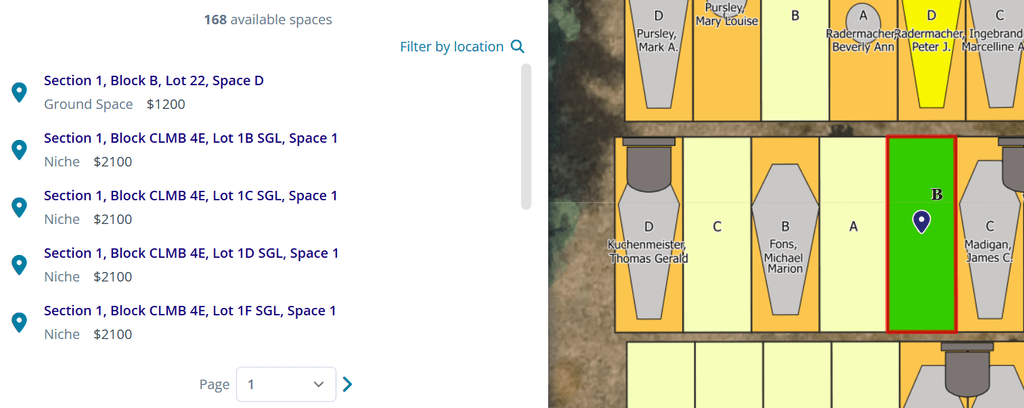
Software gives cemetery leadership access to real-time information about:
- Available inventory
- Plot sales activity
- Burial trends
- Maintenance needs
- Operational performance
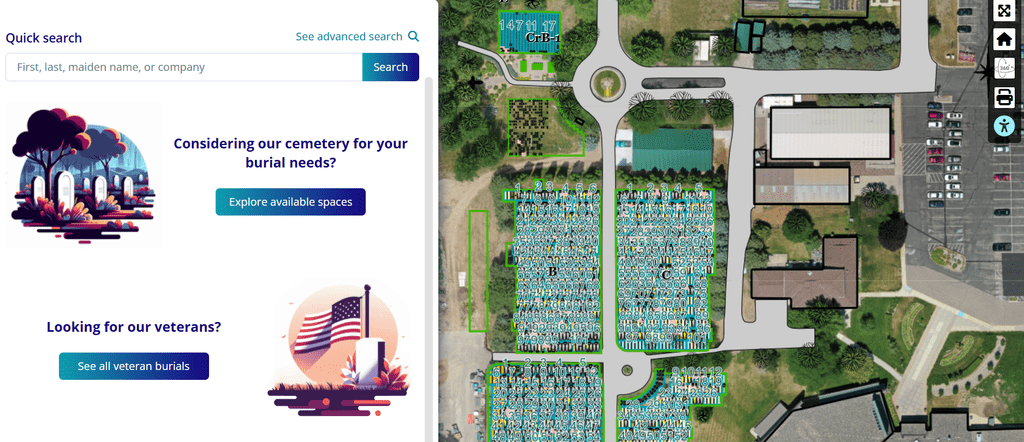
With digital mapping and centralized records, leadership teams can make decisions based on accurate, up-to-date information rather than outdated reports or manual calculations. CIMS links cemetery records to GIS-based mapping technology, allowing users to visualize information directly on a map and access records with a few clicks.
5. Families Expect Digital Access
Today’s families are accustomed to finding information online.
Many cemeteries are adding services such as:
- Online burial searches
- Digital maps
- Public memorial information
- Virtual cemetery resources
These tools improve customer service while reducing administrative workload for cemetery staff.
For boards and trustees, these features represent an opportunity to better serve the community while modernizing cemetery operations.
6. The Cemetery Industry Has Already Made the Shift
For many decision-makers, the question is no longer“Should cemeteries use software?”
The better question is:
“Which software solution is right for our cemetery?”
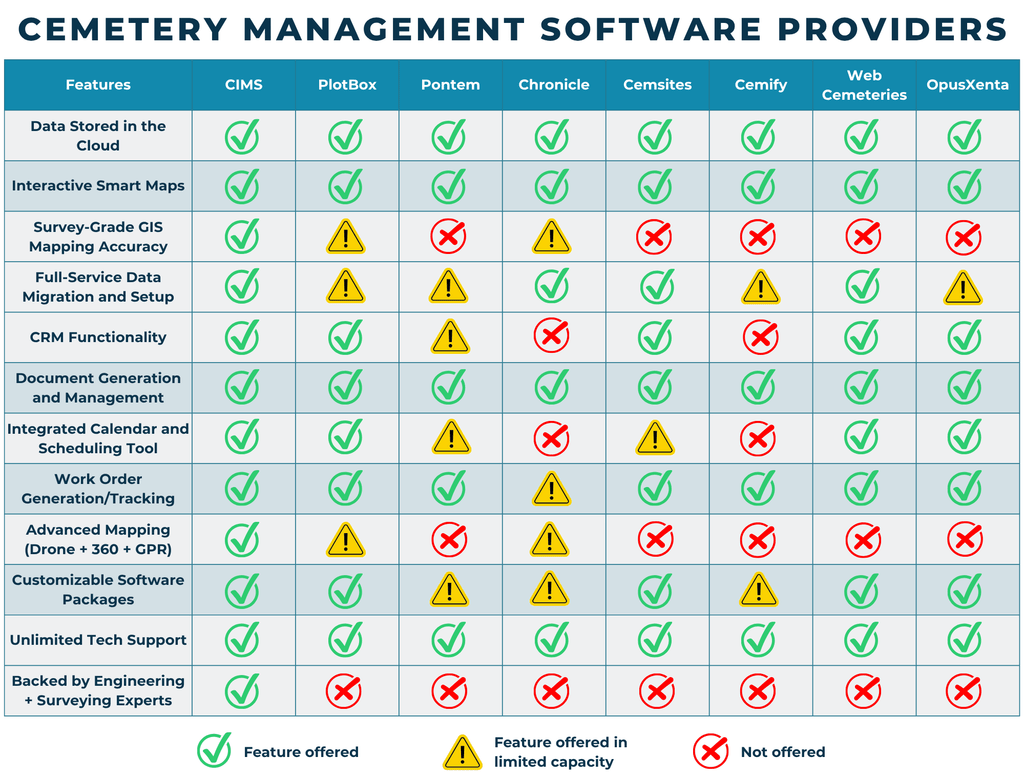
Across the country, cemeteries are moving from paper systems to cloud-based management platforms. Demand continues to be driven by digital records, GIS mapping, cloud access, public search tools, and flexible implementation options. Organizations that delay modernization often find themselves facing increasingly difficult data migrations, aging records, and greater operational risk.
Why Cemeteries Choose CIMS
For more than 25 years, CIMS has helped cemeteries modernize their operations through mapping, record management, and cloud-based software solutions. Today, the platform supports more than 1,000 cemeteries and continues to expand with new capabilities and features.
CIMS helps cemeteries:
- Digitize and preserve records
- Link burial data to GIS-based mapping
- Access information from anywhere
- Improve inventory management
- Streamline daily operations
- Serve families more effectively
Whether you’re managing a municipal cemetery, religious cemetery, association cemetery, or private cemetery, CIMS provides flexible solutions designed to simplify cemetery management.
Ready to Build a Business Case for Cemetery Software?
If your board or leadership team is evaluating cemetery software, the best first step is understanding how the right system can reduce risk, improve efficiency, and preserve records for generations to come.
Request a personalized CIMS demonstration and discover how modern cemetery software can help your organization operate with greater confidence.